

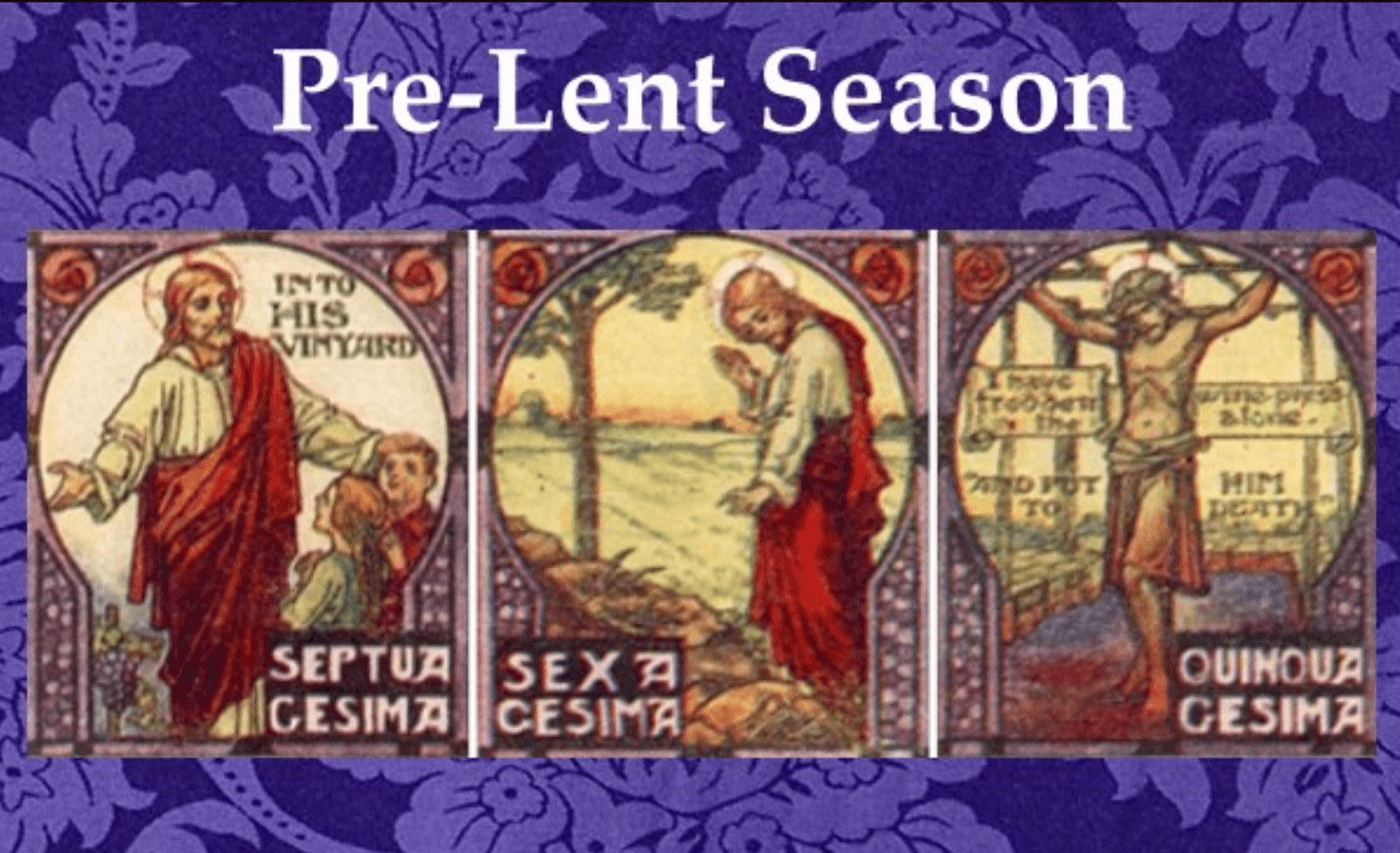

Recovering the –Gesima: The Pre-Lenten Season in the 1928 Book of Common Prayer
Many Christians today experience Lent as something that descends upon them rather suddenly. One Sunday follows another in the ordinary course of winter, and then, almost without warning, we find ourselves marked with ashes and summoned to fasting, penitence, and self-examination. Such abruptness, however, was not the mind of the historic Church.
In her older and wiser practice, the Church prepared her people gradually for the great fast. She did so not only by private exhortation, but by the steady ordering of time itself—through a short but purposeful season known as Pre-Lent, or more familiarly, the –gesima Sundays.
The 1928 Book of Common Prayer, standing squarely within the Western catholic inheritance, preserves this older rhythm. Though later revisions set it aside, the –gesima season remains a striking example of pastoral good sense and theological sobriety—one which deserves careful reconsideration in our own day.
The Shape of the Pre-Lenten Season
The Pre-Lenten season consists of three Sundays immediately preceding Ash Wednesday:
- Septuagesima
- Sexagesima
- Quinquagesima
These Sundays form a deliberate transition between the brightness of Epiphanytide and the austerity of Lent. They impose no fast, nor do they yet mark the faithful with ashes. Rather, they begin a gentle but unmistakable change in tone. The Church, as it were, lowers her voice and bids her children attend.
Septuagesima Sunday
Septuagesima Sunday is the first of the Pre-Lenten Sundays. It falls roughly nine Sundays before Easter and three Sundays before Lent. The name, meaning “seventieth,” refers symbolically to the number of days before Easter. Though the reckoning is not exact, the intention is clear enough: the Church is beginning to count.
With Septuagesima the liturgical atmosphere shifts. The Alleluia disappears from the services. Green vestments give way to violet. The lessons and collects begin to speak more plainly of labor, exile, and mortality. Without alarm or severity, the faithful are reminded that the season of penitence draws near.
Sexagesima Sunday
Sexagesima Sunday, the second Sunday of Pre-Lent, continues this inward movement. Its name signifies “sixtieth,” again in a symbolic sense. By now the turn toward Lent is unmistakable.
Quinquagesima Sunday
The final Sunday before Lent is Quinquagesima, so named because it falls exactly fifty days before Easter. It stands at the threshold.
Quadragesima and the Church’s Use of Time
The –gesima Sundays find their meaning in what follows. Quadragesima, the ancient name for Lent, marks the forty-day fast that recalls our Lord’s temptation in the wilderness. Together, these seasons reveal the Church’s careful pedagogy.
Time is not left unformed. It is shaped and ordered:
- –gesima: preparation for discipline
- Quadragesima (Lent): discipline undertaken
- Pascha (Easter): victory and joy restored
The Pre-Lenten season exists because the Church understands human nature. She knows that repentance is learned gradually, and that spiritual discipline bears fruit best when the ground has first been prepared.
Ancient Roots and Roman Practice
The observance of a Pre-Lenten season can be traced to fifth- and sixth-century Roman usage. By that time, the forty-day fast of Lent was firmly established, yet pastors recognized that many of the faithful entered it poorly, or not at all, unless they were first led toward it.
The 1928 Prayer Book and What Has Been Forgotten
The 1928 Book of Common Prayer was the last American prayer book to retain the Pre-Lenten Sundays in their full and proper place. Septuagesima, Sexagesima, and Quinquagesima appear there not as curiosities, but as integral parts of the Church’s year.
Later revisions—especially those of the mid-twentieth century—extended Epiphanytide to the very doorstep of Ash Wednesday. While this made the calendar simpler to explain, it also diminished its depth.
Why the –Gesima Season Still Matters
The –gesima Sundays remind us:
- that repentance is approached, never rushed
- that discipline requires preparation
- that joy and fasting belong to their proper seasons
- that time itself is one of the Church’s chief teachers
In an age impatient with restraint, the Church once trained her people to wait. The wisdom preserved in the 1928 Prayer Book remains available to us still. For those willing to receive it, the –gesima season offers a more measured, humane, and deeply Christian entrance into Lent—one that honors both the holiness of God and the frailty of man.
